Wildlife freaks will find the country an earthly paradise. From the grandeur of the Himalayas to tropical rainforests and large wetlands, the government is home to some of the most diverse ecosystems on Earth. India is known to be home to over 100 national parks and hosts a large number of rare and endangered species.
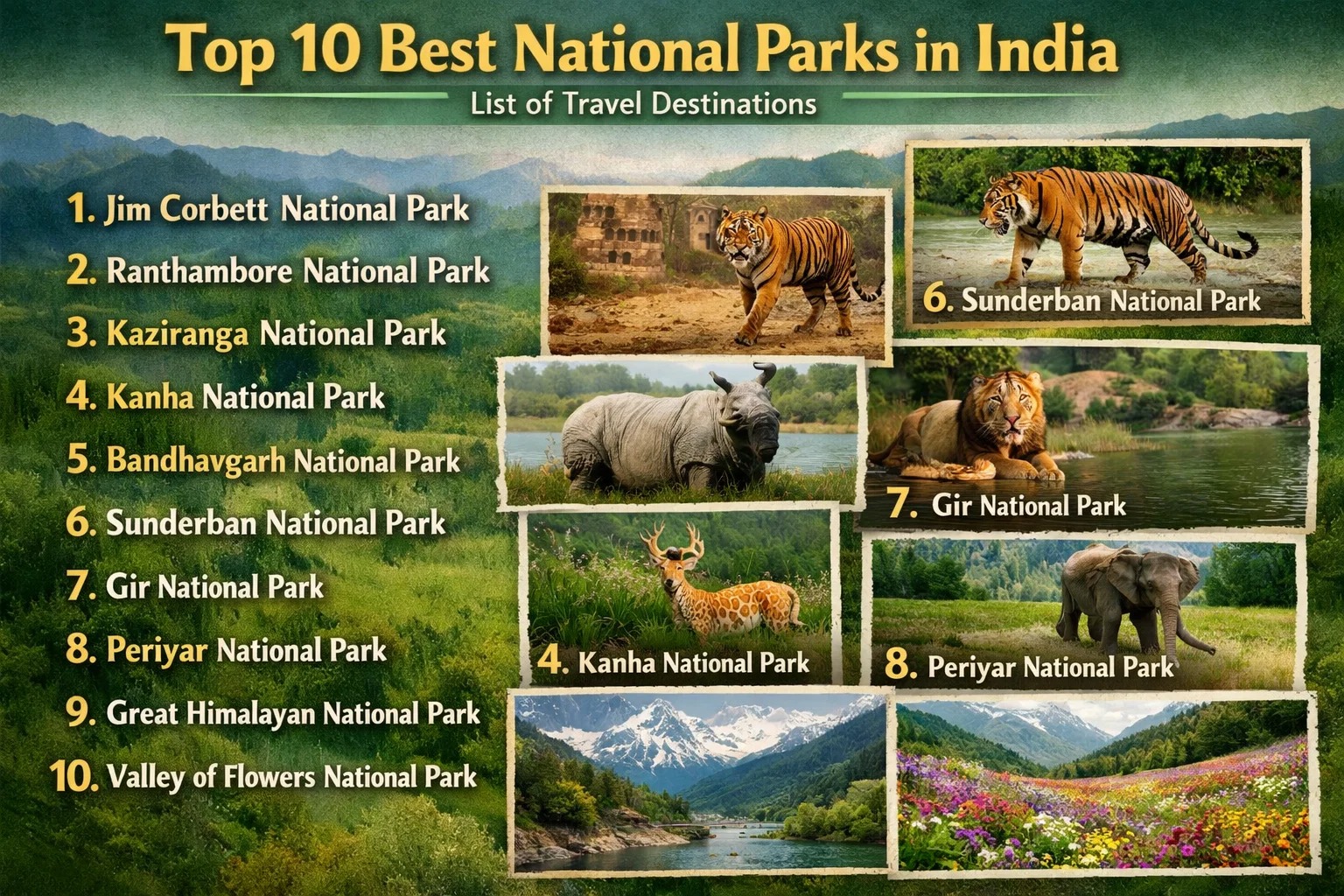
In this detailed guide, we talk about the top 10 best national parks in India that provide wildlife enthusiasts with abundant game sightings as well as stunning views and memorable safari experiences: 1. This article is created for Uniqohub readers who are curious, eco-friendly, and love learning—com for the true information that matters.
Table of Contents
Why Top 10 Best National Parks in India important for conservation and tourism?
The 10 best national parks in India are not just tourist destinations, but the pillars of the country’s conservation system. The parks save endangered species, balance the natural environment, and offer local communities a viable occupation.
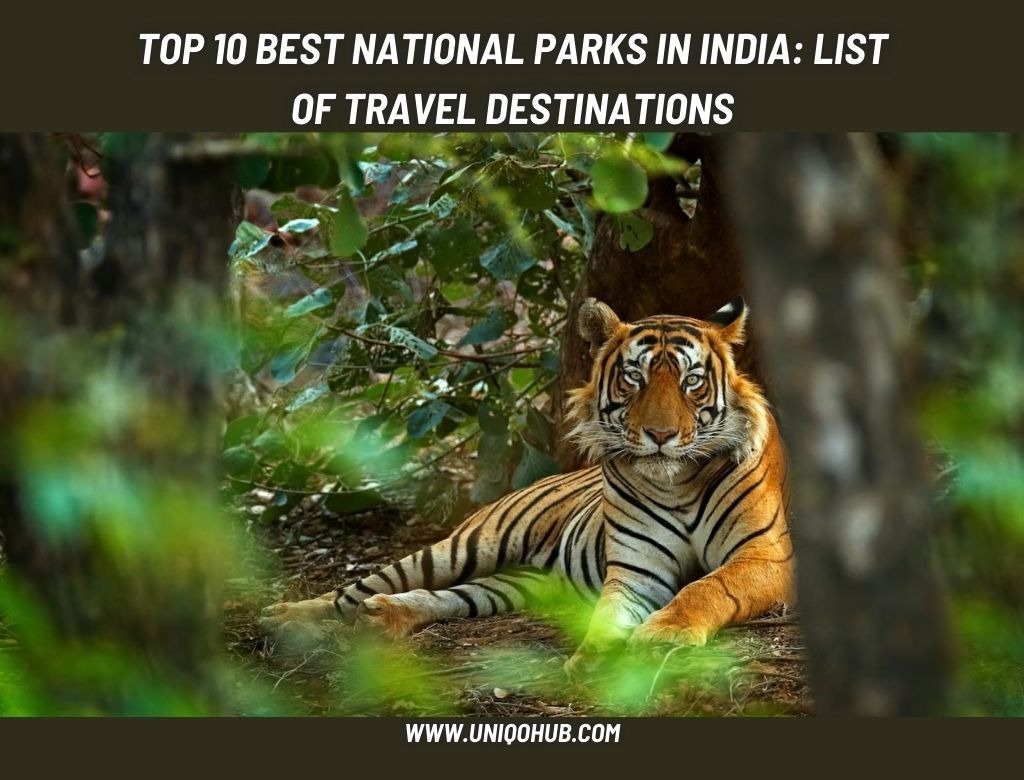
From tiger conservation projects to the protection of rare plant species and migratory birds, these parks are crucial to India keeping its status as one of the world’s most important wildlife hot spots.
How we picked the top 10 best national parks in India:
This list of the best 10 national parks in India has been compiled on the following basis:
- Wildlife diversity
- Presence of endangered species
- Landscape uniqueness
- Safari and visitor experience
- Conservation success
- International recognition
Now, we’ll take a look at each of these amazing parks.
Jim Corbett National Park – Uttarakhand
Jim Corbett National Park: Nestled in the foothills of the Himalayas, it is India’s first and one of its finest national parks. “This park is renowned for one of the highest tiger densities in the country.
With rivers, thick forests, open grasslands and hilly terrain, the park is ideal for elephants, leopards and deer, as well as crocodiles and around 400 types of birds.
Corbett is invariably labelled as one of the flagships among the top 10 best national parks in India, as it has a distinctive history related to the efficient conservation of Tigers.
Kanha National Park -Madhya Pradesh
Kanha National Park is a picturesque combination of open meadows and dense forest. It gave birth to Rudyard Kipling’s The Jungle Book and is still one of the most scenic wildlife parks in India.
It harbours tigers, leopards, wild dogs, and the rare Barasingha (swamp deer). Thanks to a well-run safari system, it is particularly beloved by photographers and researchers.
Bandhavgarh National Park – Madhya Pradesh, located in the home state of our Prime Minister of India.
Bandhavgarh has one of the densest populations of tigers anywhere in the world, making this one of the top 10 best national parks in India. There is also a great chance of visitors seeing tigers during daylight hours.
The park also hosts ancient caves, rock inscriptions and remains of antiquities, enhancing cultural interest with the wildlife.
Ranthambore National Park – Rajasthan
Ranthambore is special due to it’s impregnated landscapes and historical fortress ruins. Tigers are usually spotted by lakes and in the open, leading to remarkable interaction due to proximity, unlike many parks that have dense forests.
It is also home to a large variety of birdlife, reptiles and herbivores, providing a rounded game viewing experience.
Tadoba Andhari Tiger Reserve
Tadoba Andhari Tiger Reserve: Maharashtra . If you have always wanted to witness the stunning beauty of wild animals in their natural habitat, Tadoba Andhari Tiger Reserve should top your go-to list.
Tadoba, known as the “Land of Tigers”, is one of the best places in India to sight a tiger in its natural habitat. It’s also not as crowded as some of the bigger parks, providing a more peaceful wildlife experience.
The dry forests, lakes and bamboo groves of Tadoba are home to a diverse range of wildlife.
Gir National Park – Gujarat
Gir in the sole home of Asiatic lions in the wild. That actually makes Gir one of the best parks in India, in the top 10 best national parks in India list.
In addition to lions, Gir is home to leopards, crocodiles, deer and hundreds of bird species.
Kaziranga National Park – Assam
The Great Indian One-Horned Rhinoceros is native to the National Park, and Kaziranga is widely known as a sanctuary for this species. There are also healthy populations of tigers, elephants, wild buffalo and swamp deer.
It is the wetlands and grasslands that have also helped it to become one of the most visually attractive of all wildlife parks in Asia.
Nagarhole National Park – Karnataka
Nagarhole is a part of the Nilgiri Biosphere Reserve and features forests, rivers, and waterfalls. It’s a home to huge populations of tigers, elephants, and leopards.
And that’s what makes the southern stunning among all the top 10 national parks in India.
Madhya Pradesh – Pench National Park
Another reserve linked with The Jungle Book is Pench. Teak Forests and Open Meadows provide one of the most exciting and scenic locations for viewing wildlife.
The park is perfect for photographers and those looking to experience a calm jungle.
Sundarbans National Park:
Sundarbans National Park: West Bengal. The Tiger Reserve is part of the larger Sunderbans delta and a UNESCO World Heritage site that stretches to Bangladesh.
The Sundarbans is the largest mangrove forest in the world. With its swimming Royal Bengal tigers, it is one of the most unique wildlife areas on Earth.
Boat safaris on tidal rivers provide an unparalleled experience among the top 10 national parks in India.
Why Eco-Tourism and the top 10 best national parks in India Are Linked:
The fate of wildlife rests greatly on responsible tourism, and this is where the top 10 best national parks in India come into the picture. These sanctuaries generate eco-tourism income, which is used for animal protection, habitat rejuvenation, anti-poaching units and employment opportunities for local people. By opting for certified jungle safaris, nature lodges and trips that benefit conservation causes, travellers directly help save species under threat.
And they’re also places for us to teach about climate change, biodiversity and good stewardship. These make amazing outdoor classrooms for schools, academics, photographers and animal authorities. This is what makes the top 10 national parks in India more than tourist spots and actually knowledge hubs promoting a greener future on earth.
Conclusion:
But the top 10 best national parks in India aren’t just wildlife dominions —they are living classrooms of nature, evolution and survival. They serve as sanctuaries for endangered species and a source of livelihood for local communities, while ensuring that India passes on its natural legacy to future generations.
From Himalayan forests to mangrove swamps, these are the parks that explain why India still ranks among the world’s most thrilling wildlife destinations.
Frequently Asked Questions:
Q1. What makes the top 10 national parks in India so significant?
A: They also protect the endangered animals and help maintain ecological equilibrium. As a result, the Government has done well in promoting sustainable tourism.
Q2. Which are the best tiger parks?
A: The best places to sight tigers are Bandhavgarh, Tadoba and Ranthambore.
Q3. Which park is well known for lions?
A: The Asiatic lion is the only species that has established itself in Gir National Park.
Q4. The right park for rhinos?
A: Kaziranga National Park is the world’s best place to spot the Great Indian One-Horned Rhinoceros.
Q5. Are the top 10 national parks of India safe for tourists?
A: Yes, good ones are professionally managed with knowledgeable guides, secure safari routes and stringent wildlife protection laws.